
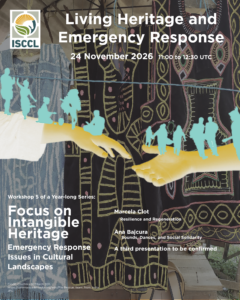
2026 Workshop #5: Focus on Intangible Heritage
Workshop #5 in a year-long series of workshops, focusing on the issues of emergency response for cultural landscapes:
Living Heritage and Emergency Response: Focus on the link between intangible heritage and cultural landscapes
Date: November 24, 2026 at 11:00 UTC
Marcela Clot
Resilience and Regeneration: The Role of Local Communities in Cultural Landscape Assessment and Management
“The stronger the communities, the more resilient they will be, a heritage for the collective benefit”
New perspectives on cultural heritage, monuments, sites, and cultural landscapes have emerged. The concepts of conservation, safeguarding, and enhancement have changed thanks to a multidisciplinary technical approach, new materials that offer improved results, and new technologies applied in conservation and safeguarding operations.
Communities that strengthen their capacities are less vulnerable to hazards or threats.
In Latin America, we are witnessing the recurrence of intense natural phenomena due to global climate change, which have serious consequences due to territorial vulnerability and the lack of awareness and resilience of local populations.
In this context, all actions must be comprehensive to address disasters and recover, while minimizing social, economic, and ecological problems. In many situations, recovery costs often exceed financial capacity, jeopardizing development policies.
To develop a culture of resilience, we need to disseminate resources and best practices related to heritage.
Two notable best practices in Argentina are the “Cocineros del Iberá” network, made up of numerous traditional cooks from the area. Their goal is to revalue and promote the culinary heritage through ancestral recipes made with local native products, transmitting the history, flavors, and aromas present in the typical dishes cooked in front of visitors in their homes. This network is an important source of income. The other is “Seda del Monte, Tesoro Escondido” (Sea of the Forest, Hidden Treasure) in the province of Catamarca, Argentina.
This experience involves the collaboration of textile designers who combine this thread, forest silk, with unique contemporary designs that are marketed and strengthen the local economy. This initiative received a grant in 2016 from Crespial-UNESCO and the local government to conduct training workshops to preserve this technique.
Biography:
Ana Bajcura
Nature-Culture: sounds, dances, social solidarity, hope and living memories of a continent
“Then I came to America, to be born a Man
And within me I brought the plains, the jungle and the mountains.
If one of my ancestors galloped to my cradle,
Another told me stories on his reed flute”
Time of Man
Atahualpa Yupanqui
“Man is earth that walks.
Man is earth moving on.
If man is earth, then song is the air of that earth
And the air of that earth, is the wind that blows across the hills,
The plains and the jungles, carrying the message of the centuries.”
Atahualpa Yupanqui
For Latin Americans, music, dance, songs, and the campfire are living beings,
that breathe the history of their people, it is their DNA. They see themselves
reflected in them. Atahualpa Yupanqui captures the essence of the Latin
America man:
Through the relationships between nature, man, emotions and landscape, we
can understand cultural transformation since the dawn of time, to the present
day, an example of a resistant living culture, that adapts and reinvents itself. A
path of hope, faith and resilience, that can easily be compared to music
1. Music is nature expressed through song. Music is part of everyday life: to
heal, to pray for rain, or to celebrate the harvest.
2. Transculturation: a transformation, a blend of rhythms and melodies that
is in constant evolution and is enriched by new generations. A connection
between zambas and the earthy beat of our bass drums. European
structure, African rhythms, and Indigenous spirituality. The Spanish guitar
and European colonization. The emergence of instruments such as the
charango and the cajón.
3. Mixture of identities: cumbia, zamba, and cueca are the result of that
cultural clash. Music is landscape, it is mystery; it is festive and
melancholic at the same time.
Celebrating natural-cultural Heritage to restore and adapt it to these new times
of “soul in crisis.”
Today, we need to reconnect with nature and show our commitment through
action.
If we consider music, we find the cumbia, a genre that has proven its
adaptability:
1. It is democratic: Anyone can master the basic rhythm.
2. It is versatile: It can be played on a reed flute in the wilderness or on a
synthesizer in a nightclub.
3. It is a refuge: It preserved the indigenous and African “spirit” (joy mixed
with a melancholic touch), within a framework that the Western world
could understand and embrace.
Small-scale initiatives rooted in the landscape: farming, adaptation,
improvement, land management, education, and outreach.
The determination of a community that has always been identified with PEACE
and with the responsibility for food security.
“I only ask God that I may not be indifferent to war.
It is a great monster, and it tramples heavily,
On all the poor innocence of people
It is a great monster, and it tramples heavily,
On all the poor innocence of people”
I only ask God
Leon Gieco
Biography:
Ana is the president of BAJCURA & ASOCIADOS, an architecture and landscape planning studio. She develops architectural and landscape projects on various scales, providing direction, execution, and consulting services to country clubs and forestry and landscape consultancies. Since 2007, she has been involved in the construction and maintenance of green areas. She is also a professor of Landscape Planning and Design at the University of Columbia in Paraguay, and gives courses and lectures at the National University of Córdoba.
Related Articles
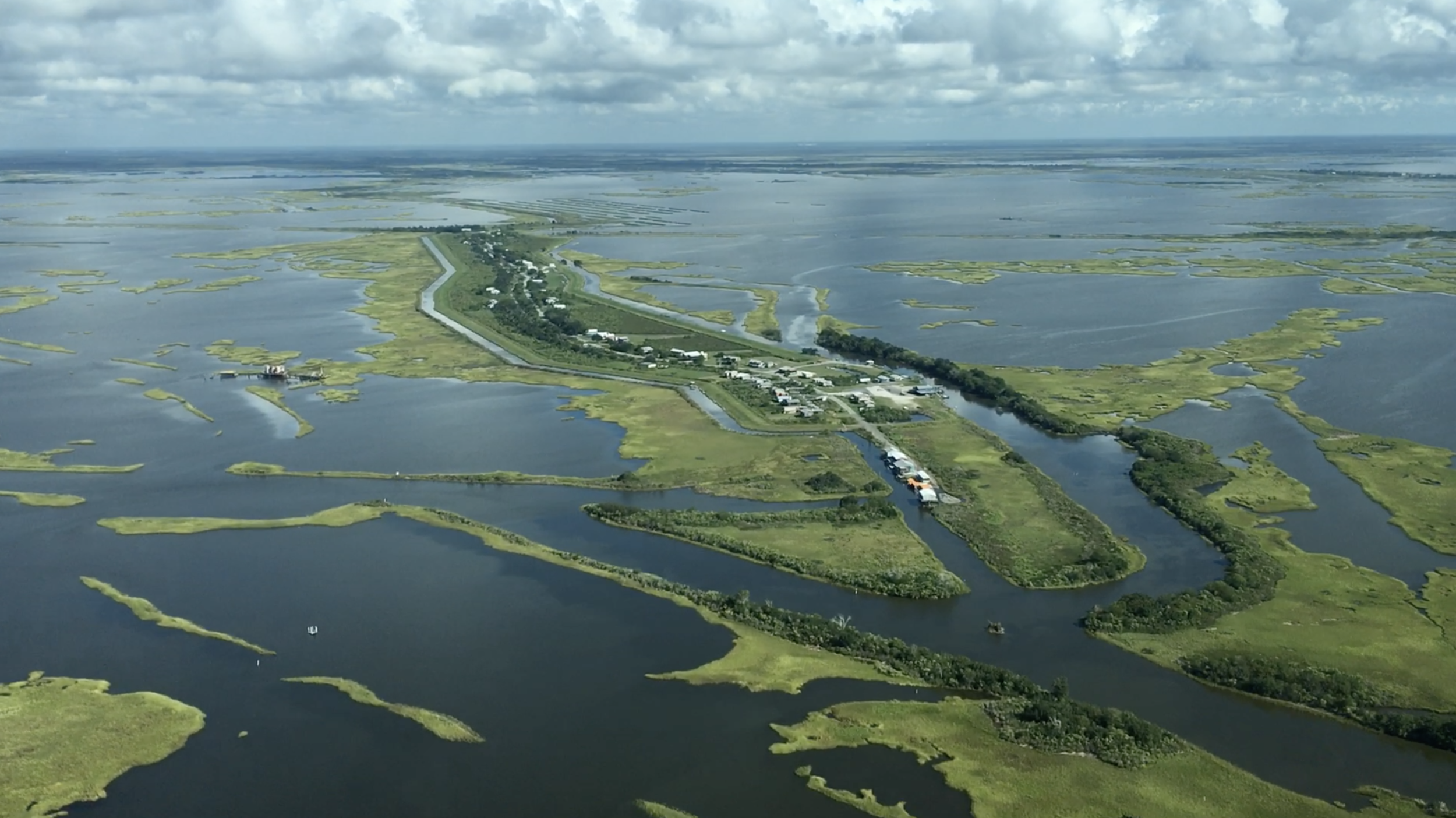
Cultural Landscapes' Critical Role in Responding to Climate Change A cultural landscape webinar that celebrates the International Day of Monuments ...
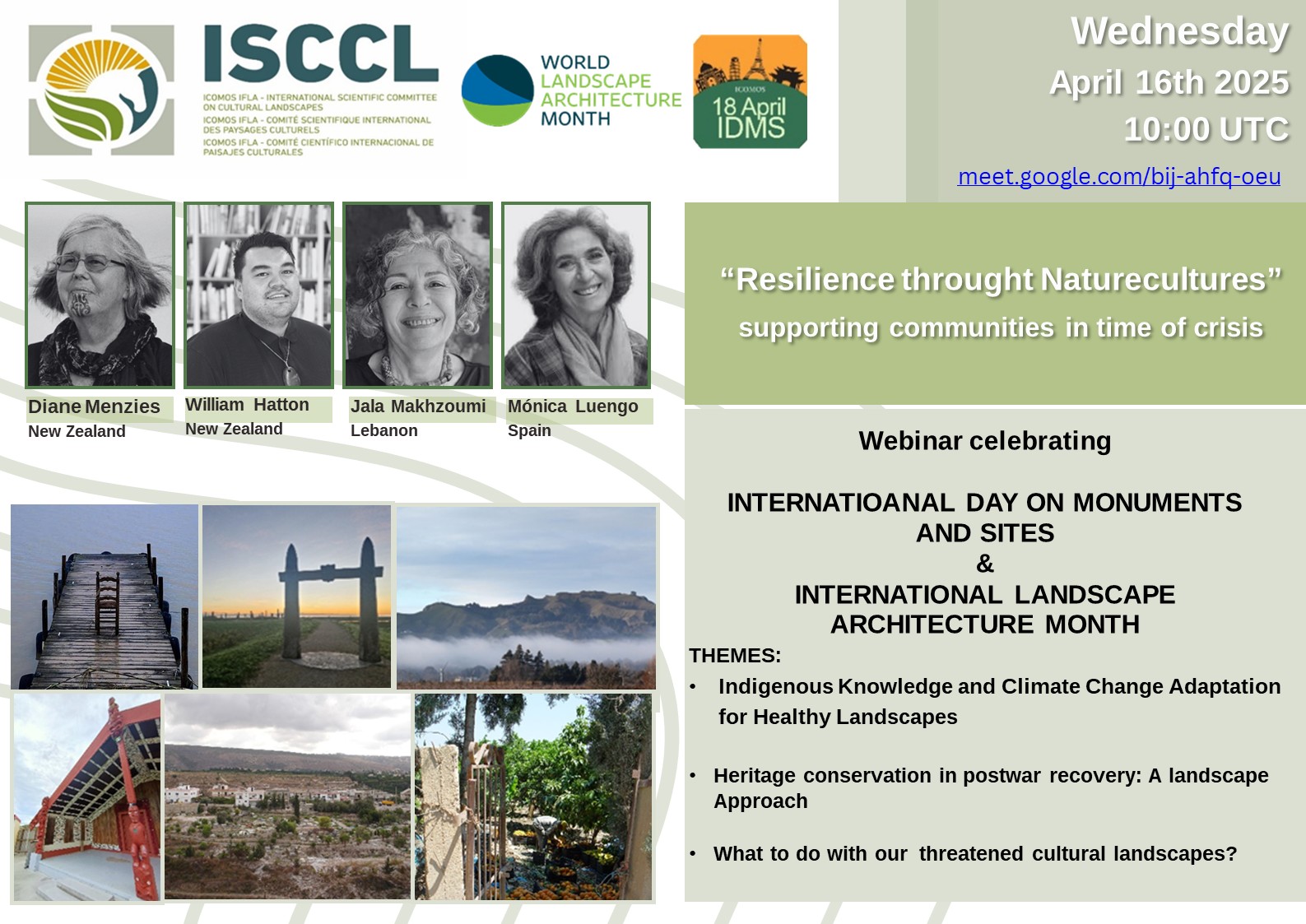
A Webinar celebrating the International Day of Monuments and Sites & International Landscape Architecture Month THEMES: Indigenous Knowledge and ...
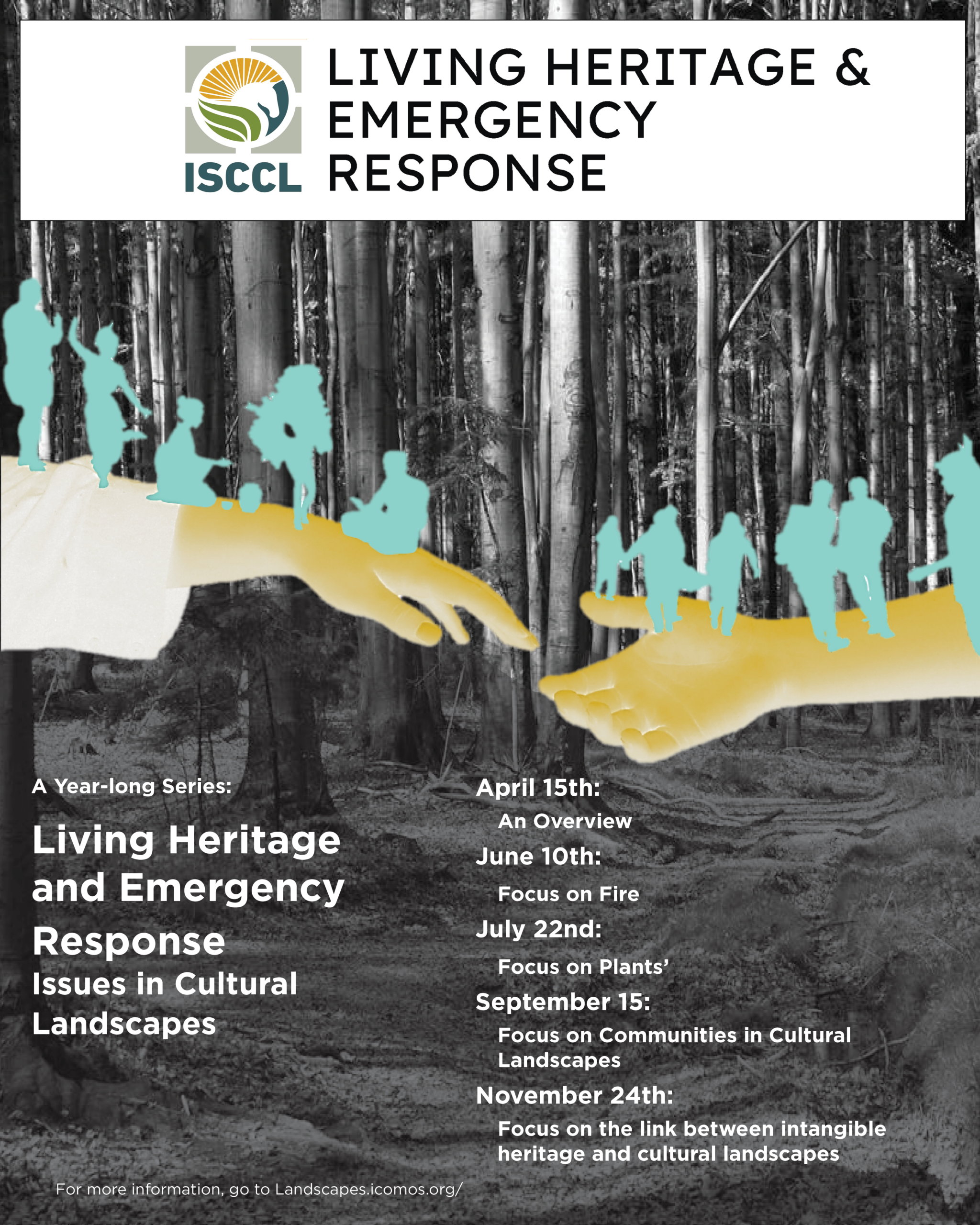
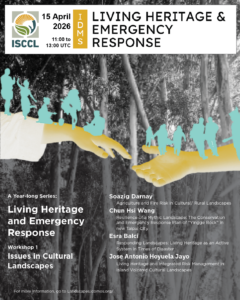
The year-long series of workshops focuses on issues of emergency response for cultural landscapes. The first workshop provides an overview ...
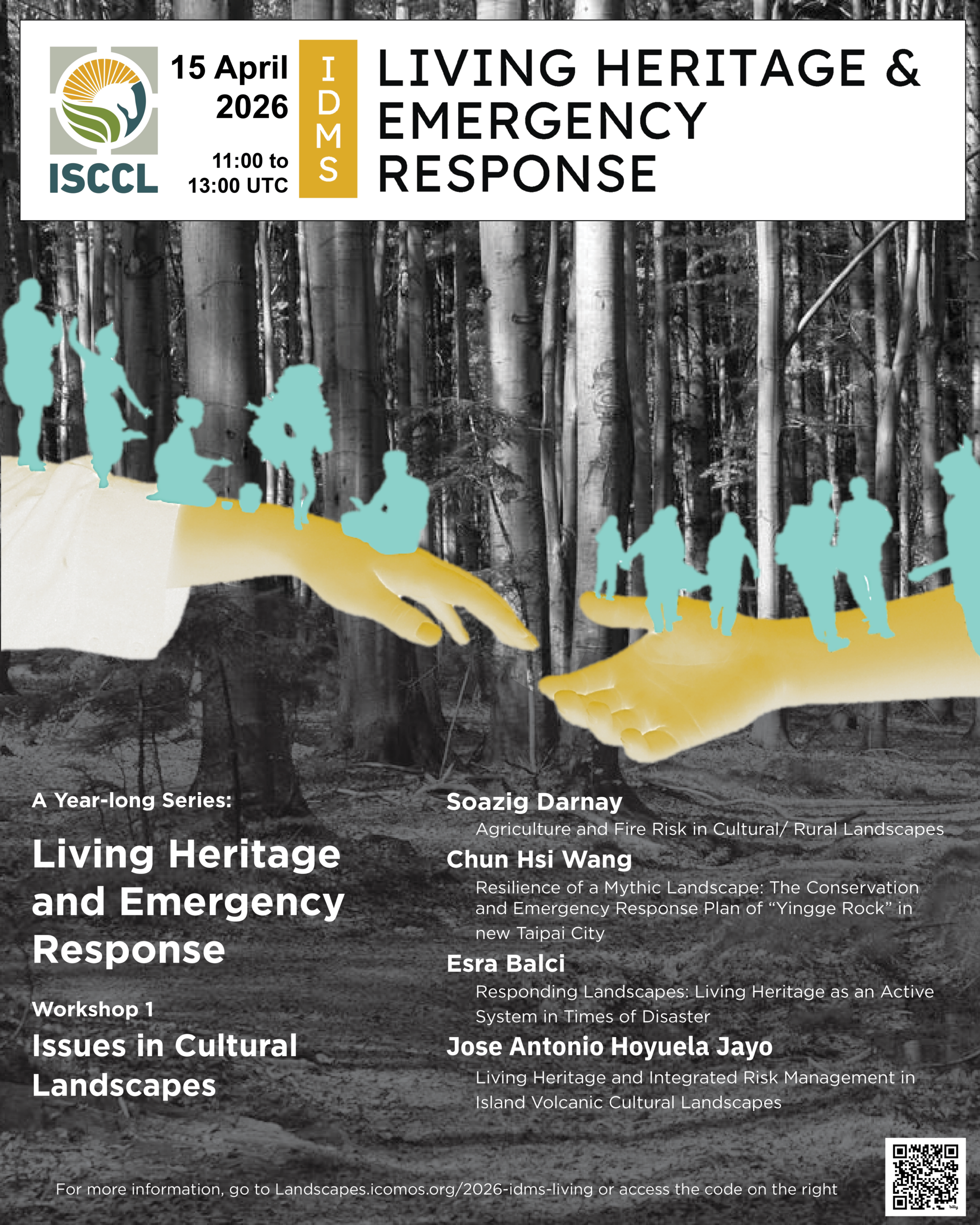
Workshop 1: A year-long series of workshops, focusing on the issues of emergency response for cultural landscapes kicks off ...
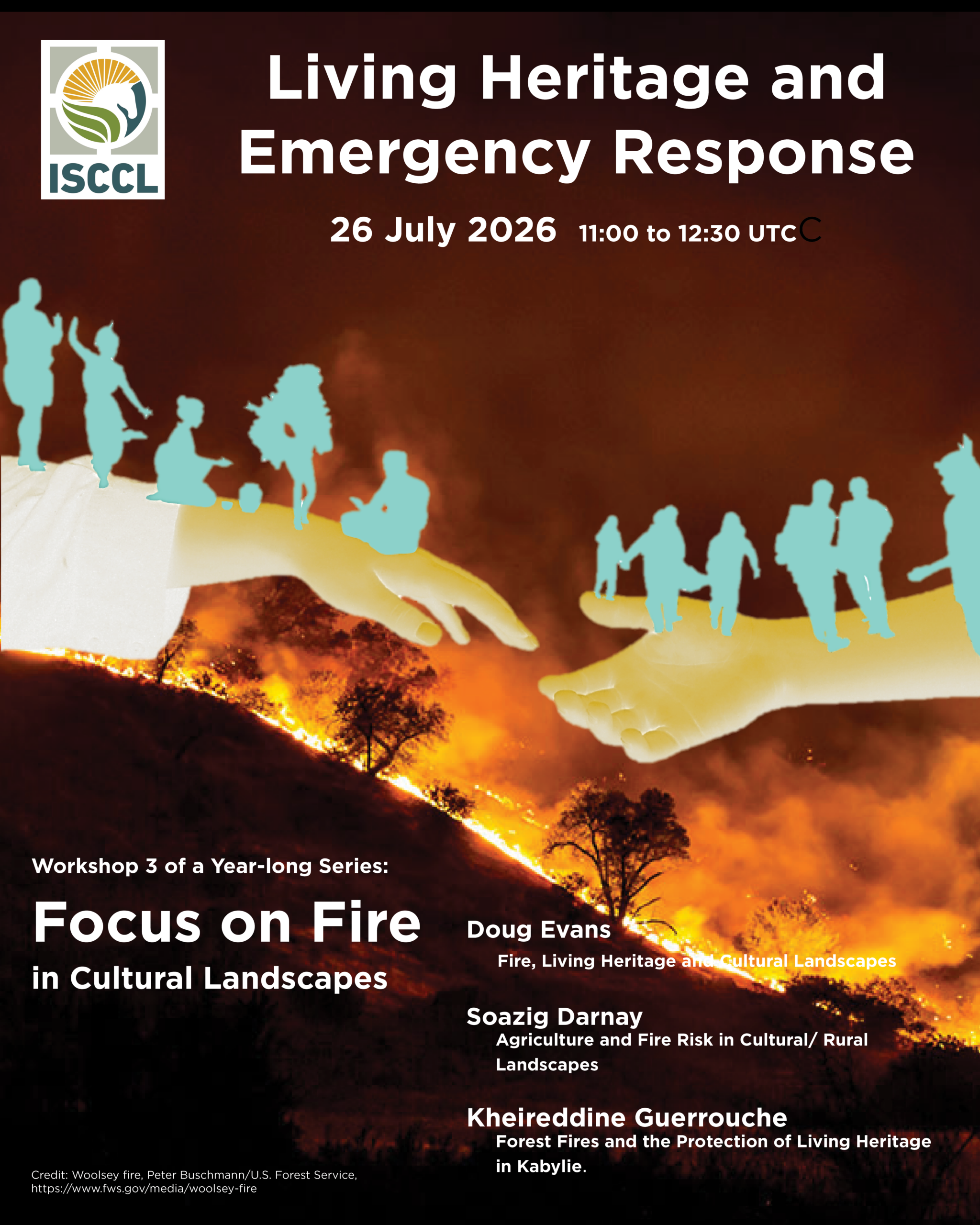
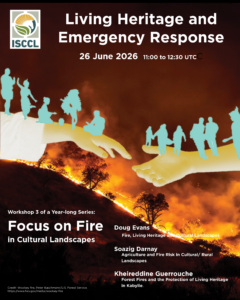
Workshop #2 in a year-long series of workshops, focusing on the issues of emergency response for cultural landscapes: Living Heritage ...
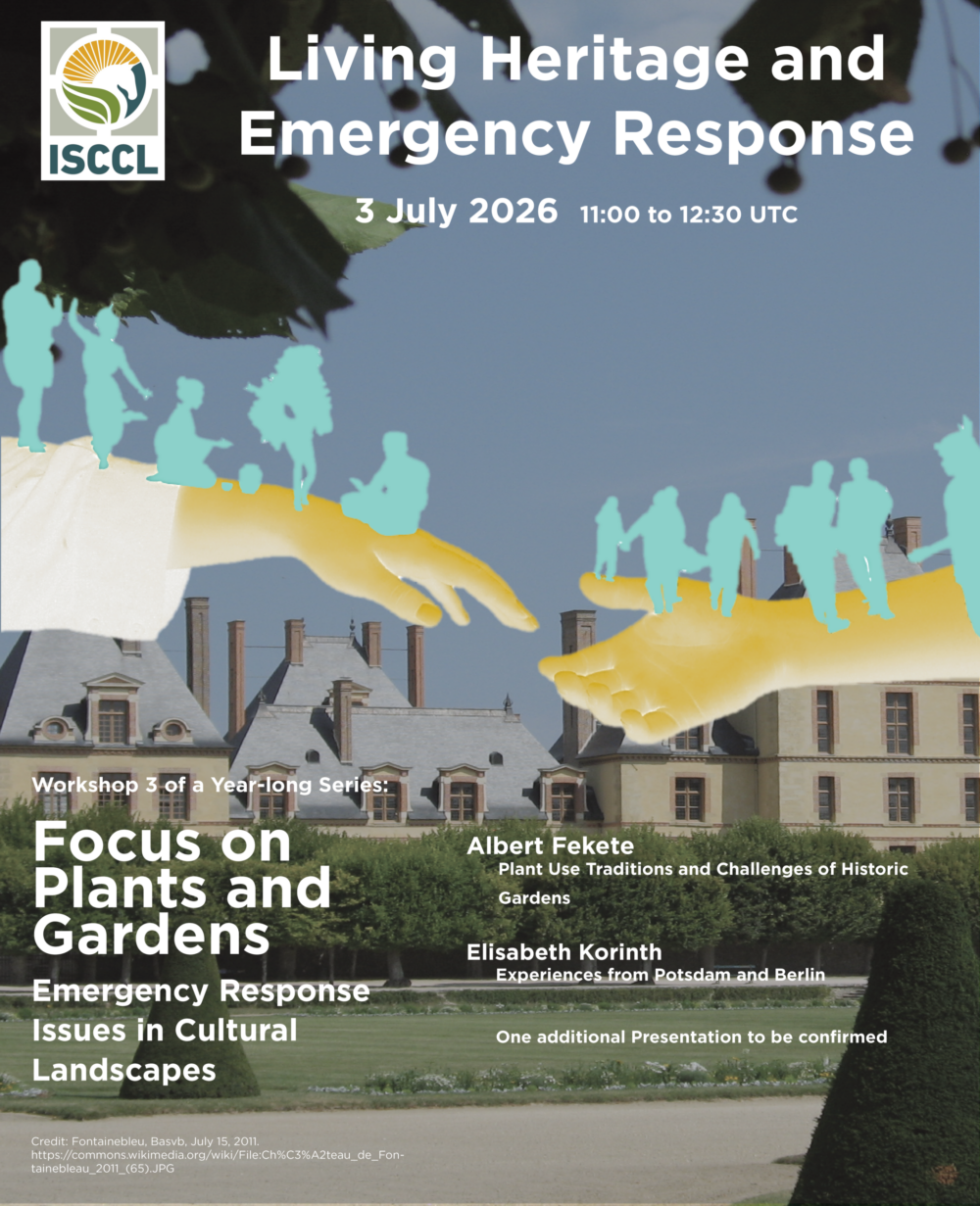
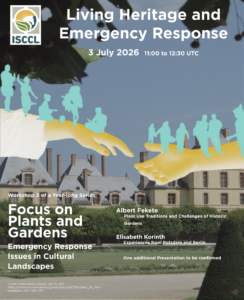
Workshop #3 in a year-long series of workshops, focusing on the issues of emergency response for cultural landscapes: Living Heritage ...
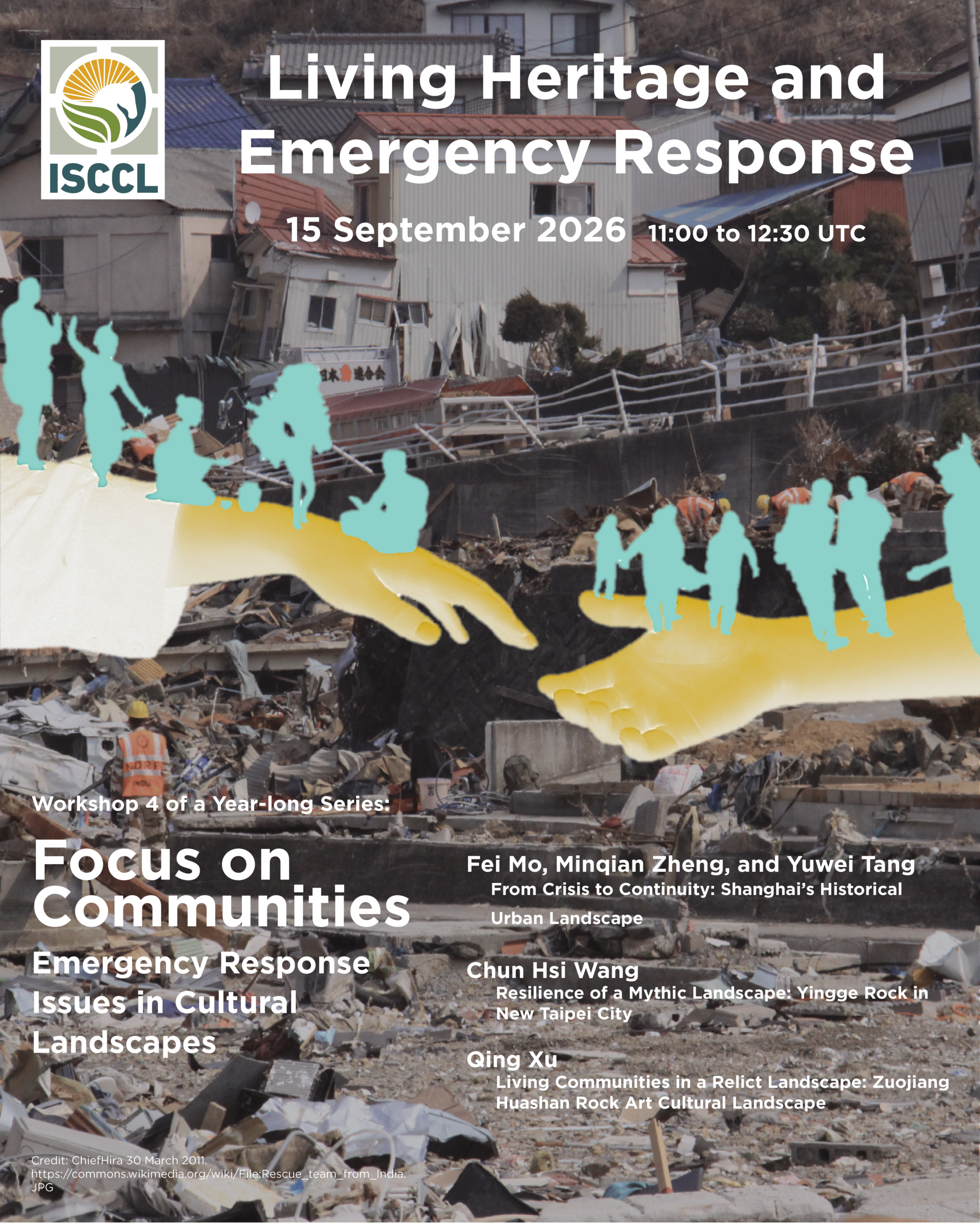
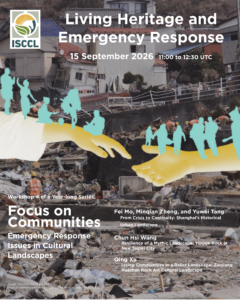
Workshop #4 in a year-long series of workshops, focusing on the issues of emergency response for cultural landscapes: Living Heritage ...

Members of the ISCCL played a major role in this year's Climate Change Conference, COP 31 in Antalya, Türkiye. ...
Workshop #5 in a year-long series of workshops, focusing on the issues of emergency response for cultural landscapes: Living Heritage ...